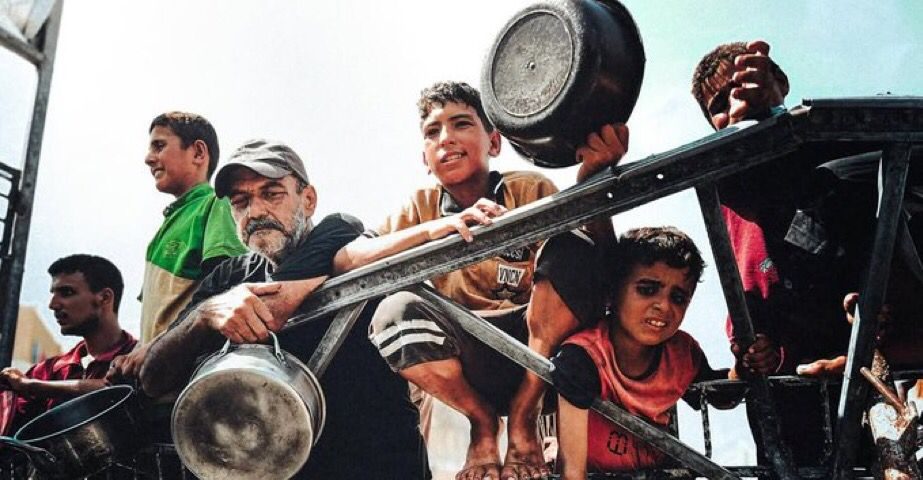
In Gaza today, survival has become an act of extraordinary courage. Families wait in long lines at food distribution points, not only battling hunger but facing the terrifying risk of being fired upon. What should be a lifeline for those in need has instead turned into a place of danger, where the simple act of seeking bread or flour can cost someone their life. Hunger in Gaza is not a tragic accident of circumstance; it is the direct result of deliberate policies and collective punishment.
This tragedy cannot be reduced to statistics alone. Behind every number is a story. Every casualty is a father searching desperately for food to keep his children alive, a mother trying to hold her family together in the face of relentless hardship, or a child who deserves the chance to dream of a future free from fear and deprivation. These are not faceless figures but human beings enduring conditions no one should ever have to face. The daily scenes of desperation are not natural disasters; they are deliberate assaults on a people’s will to survive.
And yet, even under the crushing weight of famine and violence, the spirit of Palestine endures. The resilience of its people stands as a testament to the unbreakable human desire for dignity and justice. Gaza is not defined solely by its suffering. It is a place of families, of communities, of young people with hopes, talents, and ambitions. It is a people who continue to demand recognition and the right to live in peace. That persistence, in the face of overwhelming odds, is itself a form of resistance.
The unfolding famine in Gaza is a man-made catastrophe, recognized by the international community as a violation of humanitarian law. To deprive civilians of food and aid is to weaponize hunger against an entire population. It strips families of their most basic human right, the right to life, and forces them to make choices no one should ever face. This is not merely a humanitarian crisis; it is a moral test for the world.
Now more than ever, global voices must be raised. Silence in the face of this suffering is complicity. To stand with Palestine is to refuse to allow this injustice to be hidden away. It means acknowledging that every Palestinian life matters, that their stories deserve to be told, and that their struggle demands more than sympathy, it demands action.
Action must begin with the urgent call for a permanent ceasefire. Humanitarian corridors must be opened without delay to allow food, medicine, and essential aid to reach those who need it most. Accountability must be pursued for those who deliberately obstruct relief or target civilians in violation of international law. But beyond immediate relief, there must also be a commitment to addressing the root causes of this crisis: the denial of freedom, dignity, and self-determination to the Palestinian people.
The world cannot look away. Each day that passes, the cost of inaction grows higher, not only in lives lost but in the erosion of our shared humanity. Gaza is crying out, and the echoes of its resilience call on all of us to respond.
To raise our voices for Gaza is to affirm that justice is not optional, that dignity is universal, and that peace is possible only when every human life is valued.